gap-solutions-enterprise-workflows
2024–2025
Simplifying Complex Enterprise Workflows
Redesigning complex compliance, risk, and learning workflows to make specialized enterprise products easier to understand, configure, and use.
Overview
Simplifying complex workflows across compliance, risk, and learning
At GapSolutions, I worked on enterprise software that helps organizations manage data privacy, risk assessment, compliance, and employee training.
The challenge was not simply adding features. Many workflows had accumulated complexity over time, making it harder for users to understand what to do next, how different parts of the system connected, and how their configuration affected the final experience.
My work spanned Risk Management, DPIA, and E-learning—areas where users need to configure detailed processes, make high-stakes decisions, and understand specialized information. I focused on making these workflows clearer and easier to navigate while preserving the depth required by enterprise teams and customers.

Risk Matrix

DPIA
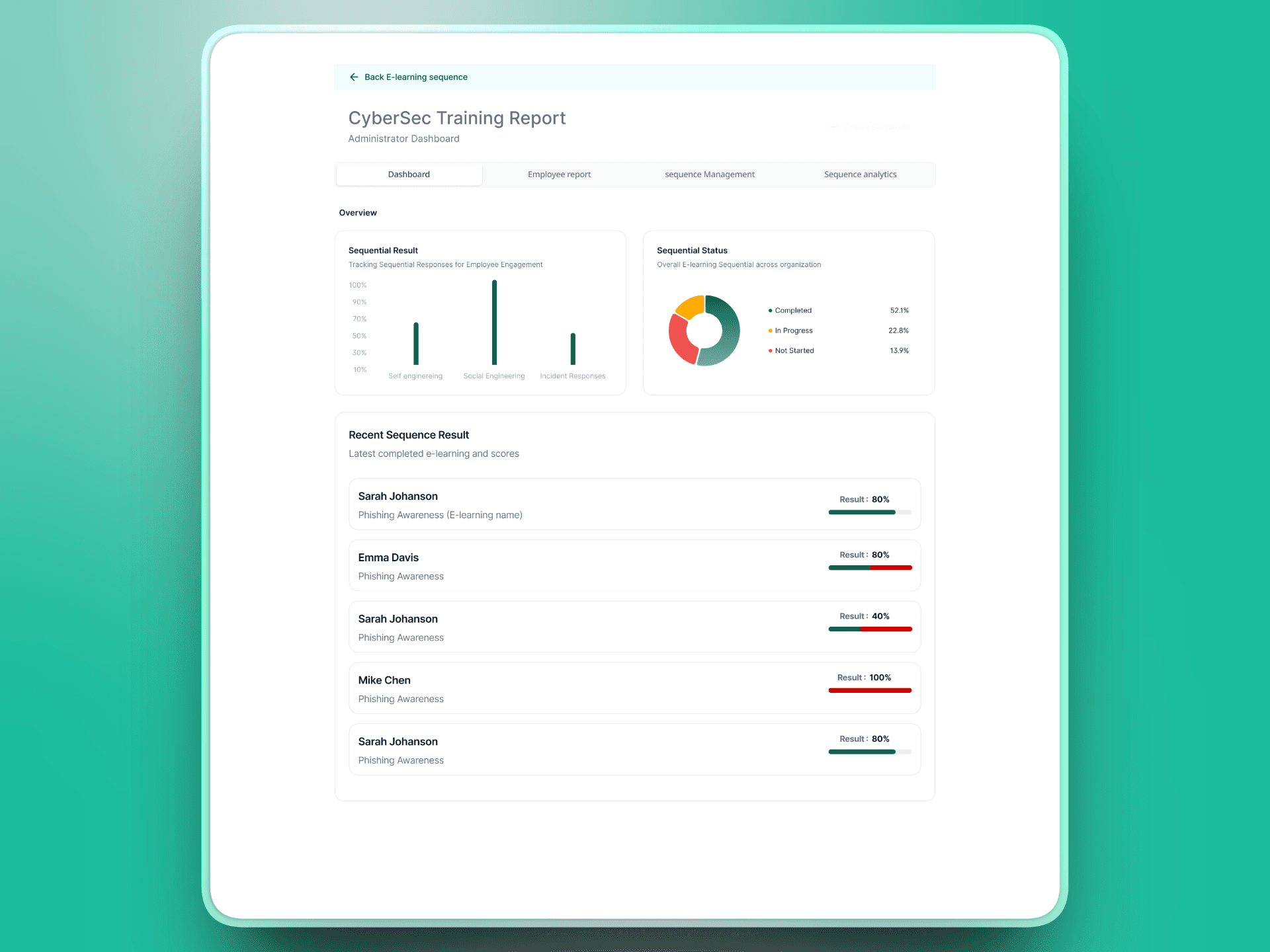
E-learning
The Challenge
The complexity wasn't in the features—it was in how they connected
The products supported complex processes, but the experience often required users to understand the system before they could confidently use it.
Important actions were spread across multiple steps and screens, relationships between settings and outcomes were not always clear, and users could need additional explanation to understand what to do next.
This complexity also surfaced in customer-facing work, where product, business, and engineering teams sometimes needed workshops and clarification to walk through the complete workflow.
The challenge was to simplify the experience without simplifying the underlying product logic.
Risk Matrix
Make complex risk configuration understandable
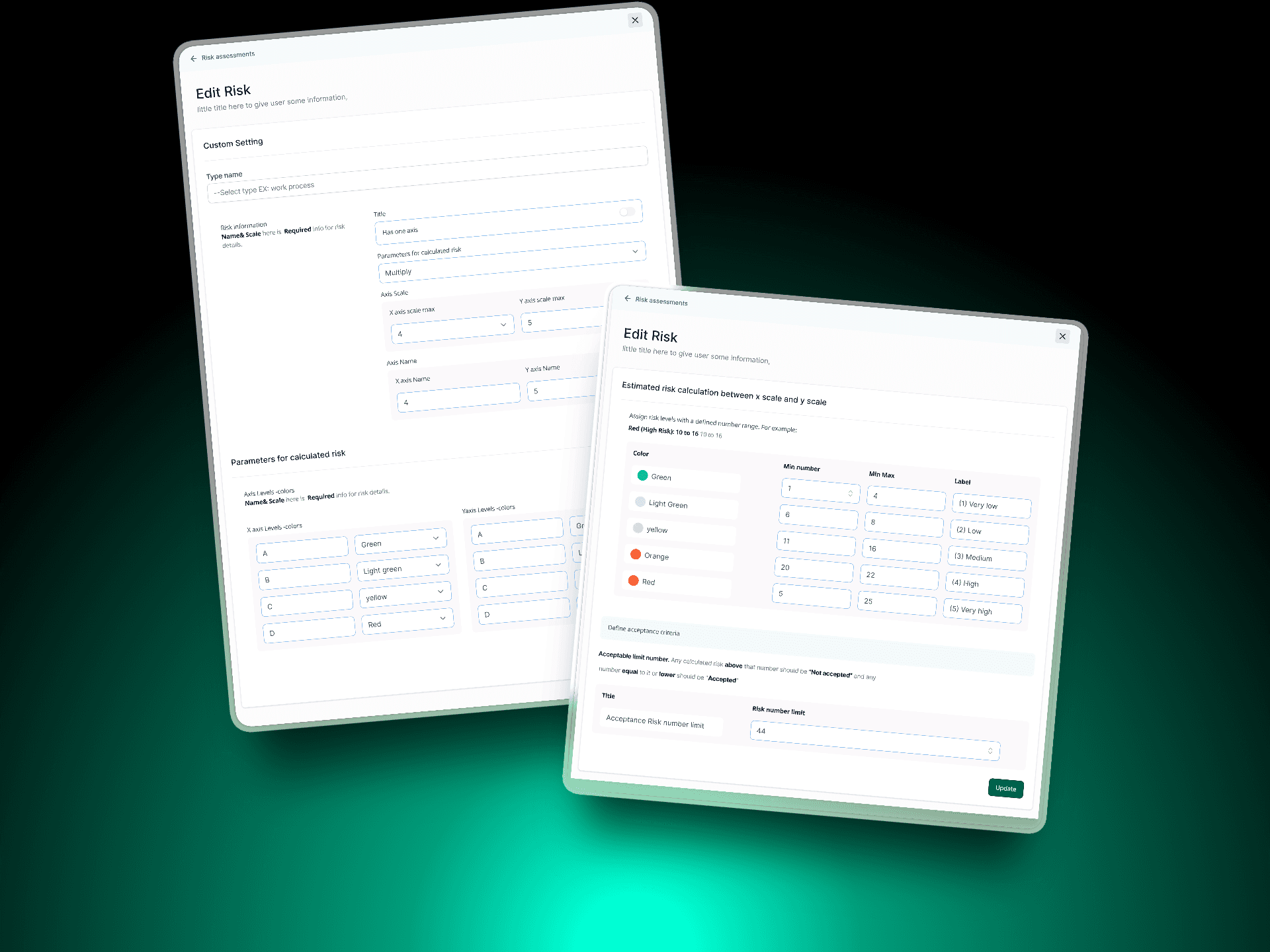
The Risk Matrix depended on a large set of configuration decisions—risk types, calculation logic, axes, scales, colors, thresholds, and acceptance criteria. In its existing form, these settings were difficult to understand as one system, forcing users to work out what each option controlled and how it affected the final matrix.
I restructured the experience into clear, logical steps so users could understand the configuration model while they worked: define the risk → configure the calculation → define risk levels → set thresholds.
I also introduced a comparison experience that lets users view two risk matrices side by side and use the
color distribution to quickly understand how the overall risk profile changes across assessments.
From complex configuration to an understandable risk model
The redesigned flow makes each configuration decision explicit and introduces side-by-side matrix comparison for interpreting changes in overall risk.
DPIA
Guide complex privacy assessments one decision at a time
The DPIA workflow asked users to establish their processing activity, assess its risk, and then complete the detailed assessment. The challenge was making a compliance-heavy process understandable without removing the information and controls required by the workflow.
I restructured the experience so each step provides the context needed for the next decision, starting with the processing activity and risk category before moving into the deeper assessment.
The goal was to replace a form users had to interpret with a guided flow that makes it clearer what to provide, why it matters, and what happens next.
Risk Matrix
Make complex risk configuration understandable
The Risk Matrix depended on a large set of configuration decisions—risk types, calculation logic, axes, scales, colors, thresholds, and acceptance criteria. In its existing form, these settings were difficult to understand as one system, forcing users to work out what each option controlled and how it affected the final matrix.
I restructured the experience into clear, logical steps so users could understand the configuration model while they worked: define the risk → configure the calculation → define risk levels → set thresholds.
I also introduced a comparison experience that lets users view two risk matrices side by side and use the color distribution to quickly understand how the overall risk profile changes across assessments.


Outcome
Designing clarity into complex enterprise products
Across Risk Management, DPIA, and E-learning, I focused on making complex enterprise workflows easier to understand and navigate. By combining workflow thinking, information architecture, and interaction design, I simplified complexity without compromising the depth these products require.
